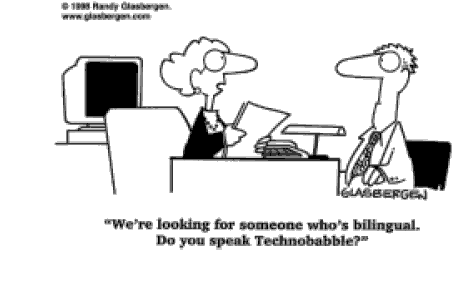
From GUI Bloopers, by Jeff Johnson (Morgan Kaufman Publishers, 2000). Used without permission.
As the number of people who use computer-based products increases to a
larger share of the population, more and more people are finding themselves in
a similar situation, except that the “foreign” language their software displays is
not Greek, but rather Geek.
Figure 1: Speaking Geek
There are several different ways to speak Geek:
Variation A: Using programmer jargon.
Many software developers don’t switch
off their use of jargon when writing
software for nonprogrammers. This
can happen for a variety of reasons:

Figure 2: Using a programmer jargon
Variation B : Turning common words into programmer jargon.
When developers redefine commnon words and expect the users to adapt to them, they are not being considerate of users.
Examples:
Variation C : Turning verbs into nouns
Variation D : Exposing terms from the code
Lift terms right out of code and include them in the user interface. A very common way of exposing users to terms from the code is to include the GUI toolkit name of a component, control, or datatype in its name or label.
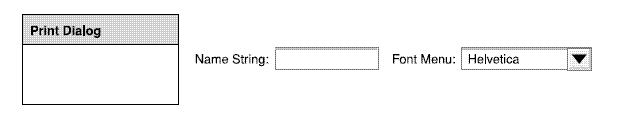
Figure 3: Dialog box that includes the word "Dialog" in its title, a "Name" setting that tells users that the value is stored as a string, and a menu that has "Menu" in its label
Lifting words and phrases straight out of the code is also common in error messages

Variation E : Assigning arbitrary meanings to short, nondescriptive terms.

Figure 5: "Find Again" and "Search Again" are different even though it is not clear from their names.
The Design Rule: Avoid speaking geek
The Geek-speak has to go.
March 28, 2005